If you’re planning to install solar panels on your rooftop, one of the most important questions is: “How much energy does a solar panel produce per day?”
Understanding solar panel output helps you choose the right system size and estimate your power savings. This guide breaks down the numbers clearly, using Indian examples and simple math.
What Is the Rated Power of a Solar Panel?
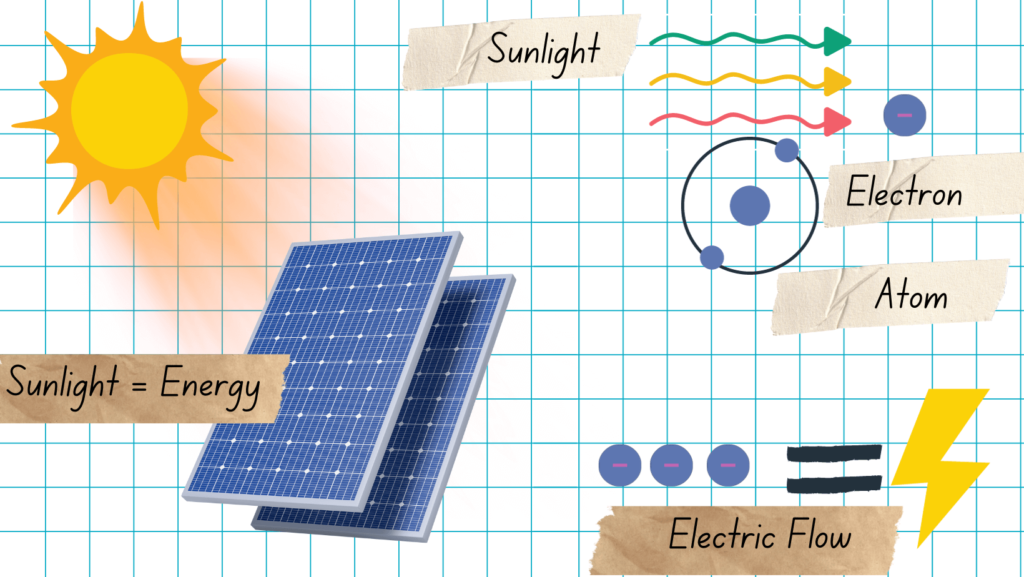
Each solar panel comes with a power rating, usually between 300W and 650W. This rating shows how much power the panel can generate under ideal conditions.
But perfect conditions do not exist all the time. In real life, the energy produced is a little lower than the rated power.
How Much Energy Does One Solar Panel Generate Per Day?
The amount of electricity a panel produces daily depends on two things:
- The panel’s wattage
- The number of peak sunlight hours
Let’s take a 400W solar panel, and assume your location receives 4 peak sun hours per day. The daily output will be:
400W × 4 hours = 1600 Wh = 1.6 kWh per day
So, a single 400W panel can generate between 1.6 to 2.0 kWh per day in India.
Also Read Unlock Free Power: State & National Solar Incentives Every Indian Homeowner Should Know
Solar Power Output Across Indian States
India receives strong sunlight in most parts of the country. Most regions get around 4 to 6 sunlight hours per day. Here’s how a 1 kW rooftop system performs in different Indian cities:
| City | Daily Solar Output (kWh) | Yearly Output (kWh) |
|---|---|---|
| Delhi | 4.2 – 5.0 | 1500 – 1800 |
| Mumbai | 3.8 – 4.5 | 1350 – 1650 |
| Jaipur | 4.5 – 5.5 | 1600 – 2000 |
| Chennai | 4.0 – 4.8 | 1450 – 1750 |
| Bangalore | 4.0 – 5.0 | 1450 – 1800 |
These figures show why solar power is a good fit for Indian households.
Real-Life Example: 3kW Solar System for a Home
A 3 kW rooftop solar system with 330W panels includes around 9 panels. Here’s what you can expect:
- Daily output: 3 kW × 4.5 hours = 13.5 kWh/day
- Monthly output: ~400 kWh
- Yearly output: ~4800–5000 kWh
- Monthly savings: ₹3,000 – ₹4,000 (at ₹7–8 per unit)
This is ideal for an Indian household with moderate energy use, including lights, fans, fridge, TV, and washing machine.
Factors That Affect Solar Panel Efficiency
Solar panels rarely run at their full rated capacity. Here are some key factors that affect how much power they generate:
1. Sunlight Hours
More sunlight means more electricity. Regions in north-west and central India often have better solar generation.
2. Roof Orientation and Angle
South-facing roofs give the best exposure. The tilt angle should be between 10 to 30 degrees based on your latitude.
3. Temperature
High temperatures can reduce efficiency. Panels work best in cool, bright sunlight.
4. Dust and Pollution
Dusty or polluted areas like Delhi or Kanpur may lose 10–20% output. Cleaning your panels monthly can help recover this.
5. Shading
Shade from trees or nearby buildings can block sunlight. Even partial shading reduces system performance.
How to Estimate Daily Solar Output
You can estimate how much electricity your solar panels will generate using this simple formula:
System Size (kW) × Peak Sun Hours × 0.8 = Daily Output (kWh)
The 0.8 is a derating factor that accounts for losses from dust, wiring, inverter, etc.
Example:
For a 5 kW system in Hyderabad with 5 sun hours:
5 × 5 × 0.8 = 20 kWh/day
How Many Solar Panels Do You Need?
Here’s a chart to help you plan your system size based on daily energy needs:
| System Size | Number of 400W Panels | Daily Output (kWh) |
|---|---|---|
| 1 kW | 2–3 panels | 4–5 |
| 3 kW | 7–8 panels | 12–15 |
| 5 kW | 12–13 panels | 20–25 |
| 10 kW | 25–26 panels | 40–50 |
If your monthly electricity use is 600 units, you may need a 5 kW system.
Will Solar Panel Output Drop Over Time?
Yes, but slowly. Most panels degrade at about 0.5% per year. After 25 years, your panels will still produce around 80 to 85% of their original output.
That’s why choosing high-quality solar panels is important for long-term value.
FAQs on Solar Panel Energy Production
Q1. Do solar panels work on cloudy days?
Yes, but efficiency drops by 40–70%. They still generate power from diffused sunlight.
Q2. Can solar run heavy appliances like AC or washing machine?
Yes. A 5 kW system can run a 1.5-ton AC, fridge, TV, and other household appliances during the day.
Q3. Do I need batteries with solar panels?
Only if you want backup during power cuts. With net metering, batteries are optional.
Q4. Which solar panel type gives higher energy output?
Monocrystalline panels are more efficient than polycrystalline ones and perform better in low-light areas.
Q5. How often should solar panels be cleaned?
In Indian cities, clean once or twice a month. Rural areas with less dust may need less frequent cleaning.
Conclusion: Know Your Solar Output to Maximize Benefits
On average, a solar panel in India generates 1.5 to 2 kWh per day, depending on size, location, and conditions. Knowing this helps you plan your system correctly and avoid overpaying.
A 3 to 5 kW solar system is usually enough for most Indian families. It can help reduce power bills by ₹3,000–₹6,000 per month, depending on usage and tariff.
Solar is a smart investment for your home and the planet. The key is to estimate your needs properly—and then enjoy free power for years to come.